
Camaleonda.
A radical sofa built from generous modules—and designed to keep changing.
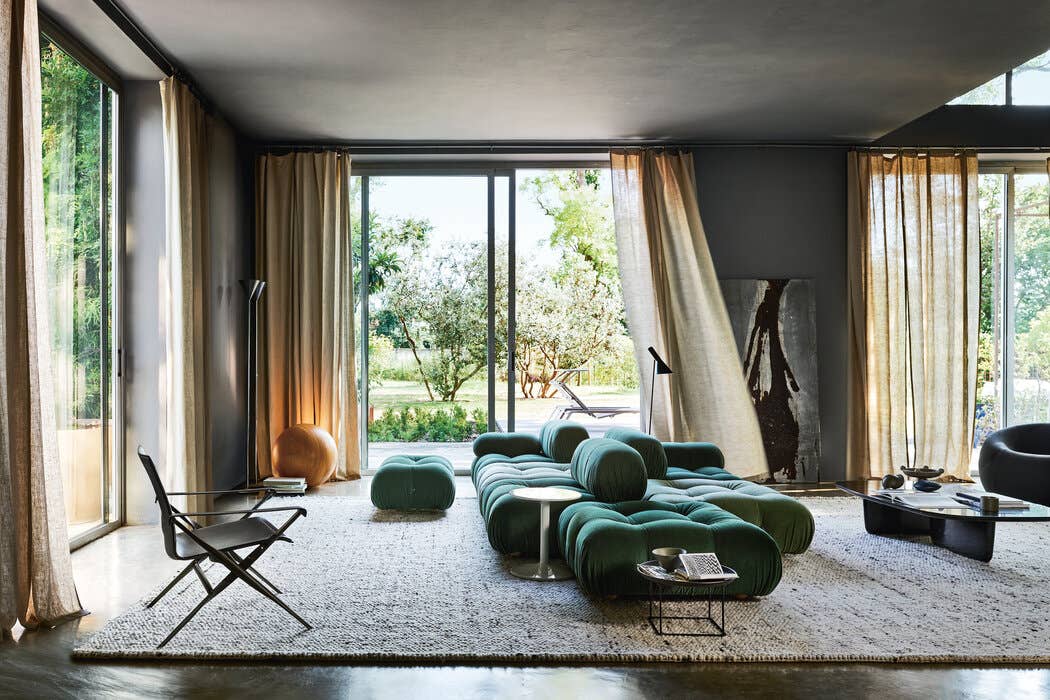
Furniture as
a landscape.
Camaleonda does not prescribe how a room should be used. It gives the room a soft, adaptable landscape.
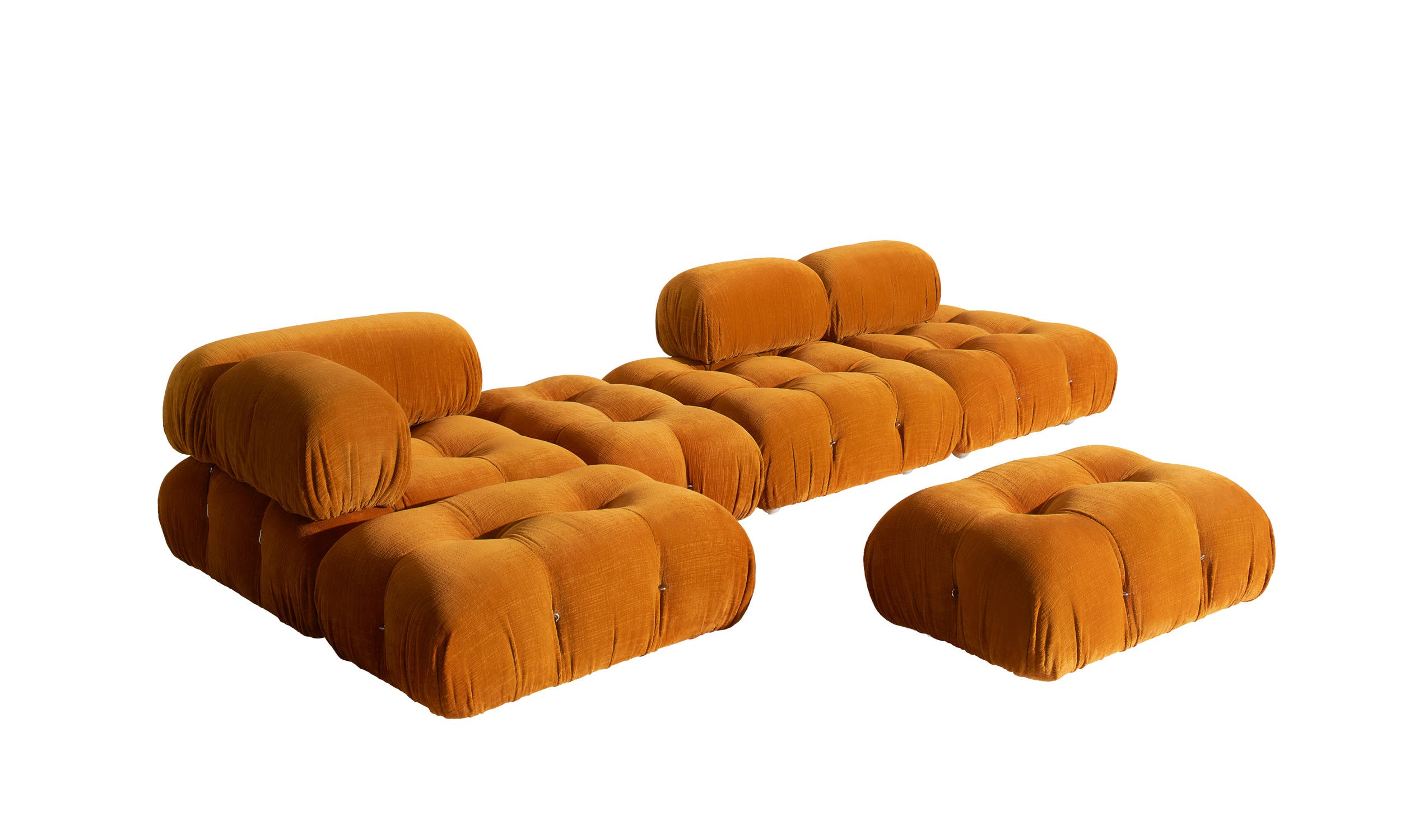
Mario Bellini developed Camaleonda in 1970 as a collection of independent seats, backs and armrests rather than a fixed sofa. Each element has a strong identity of its own, yet the pieces can gather into linear settings, corners, islands or face-to-face arrangements.
The low profile and deep capitonné upholstery made the design unmistakable. Its more lasting idea, however, is freedom: the ability to change a composition without changing the furniture.
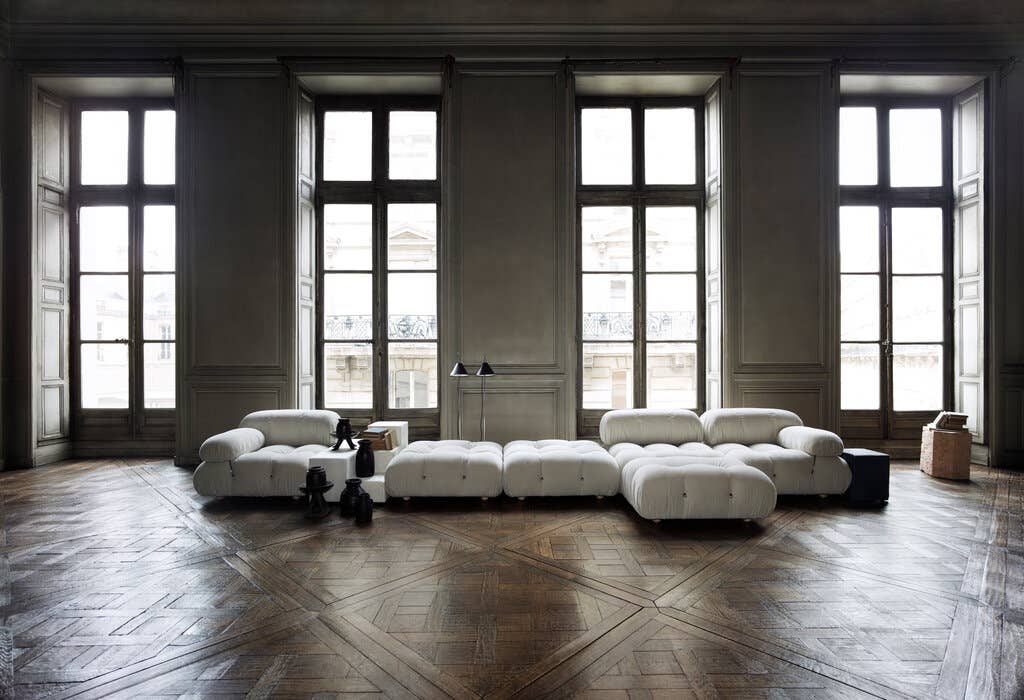
One language.
Infinite plans.
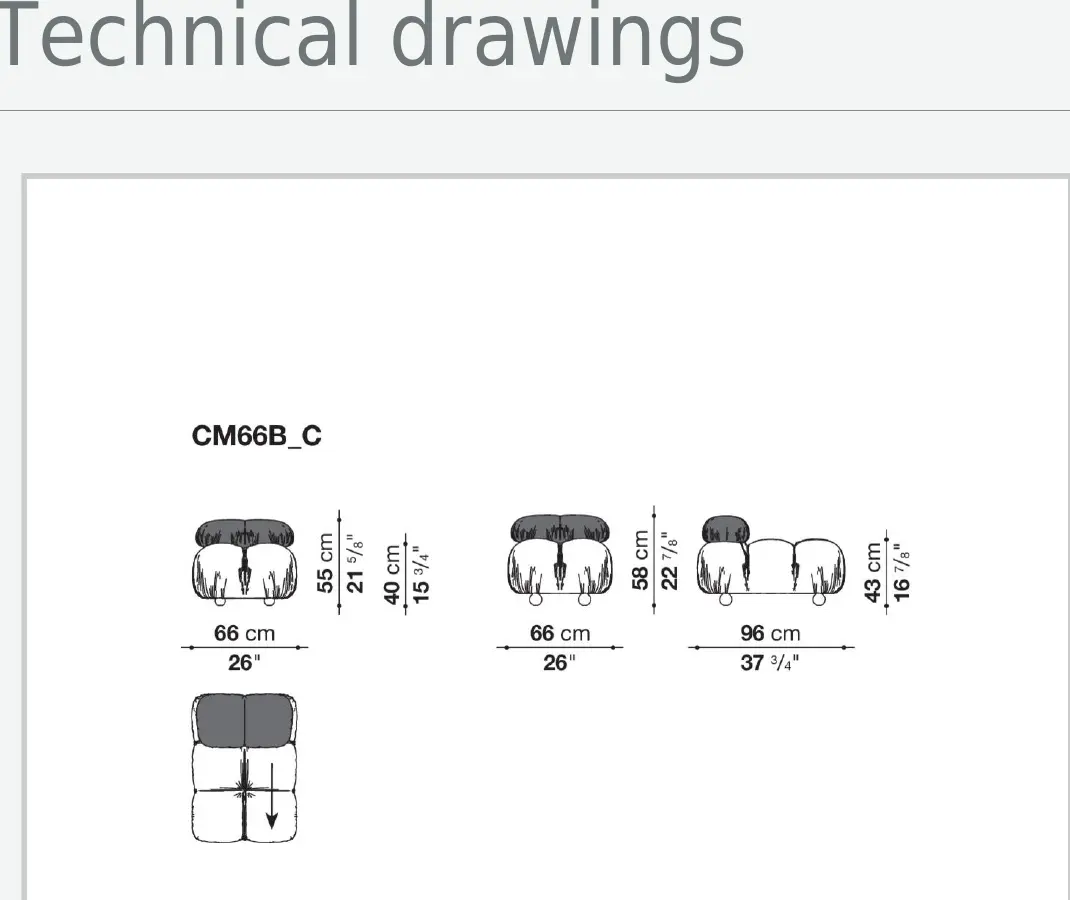
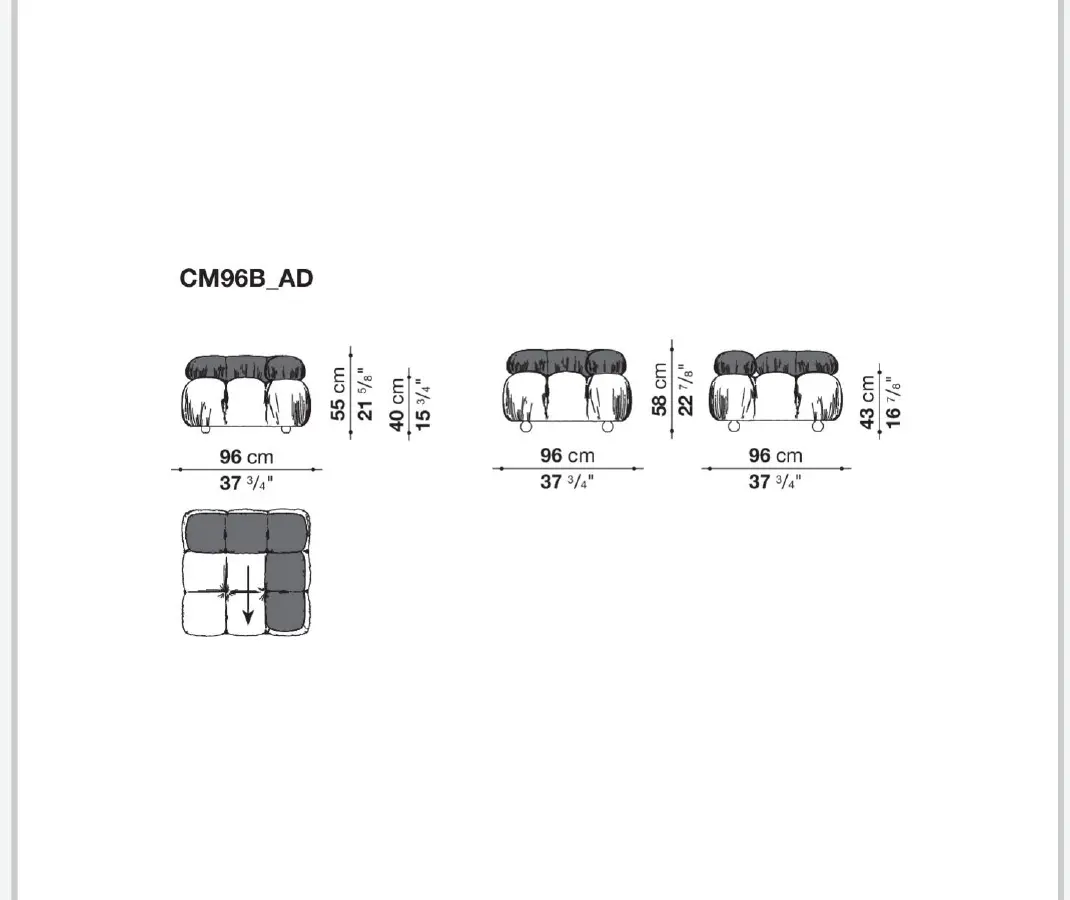
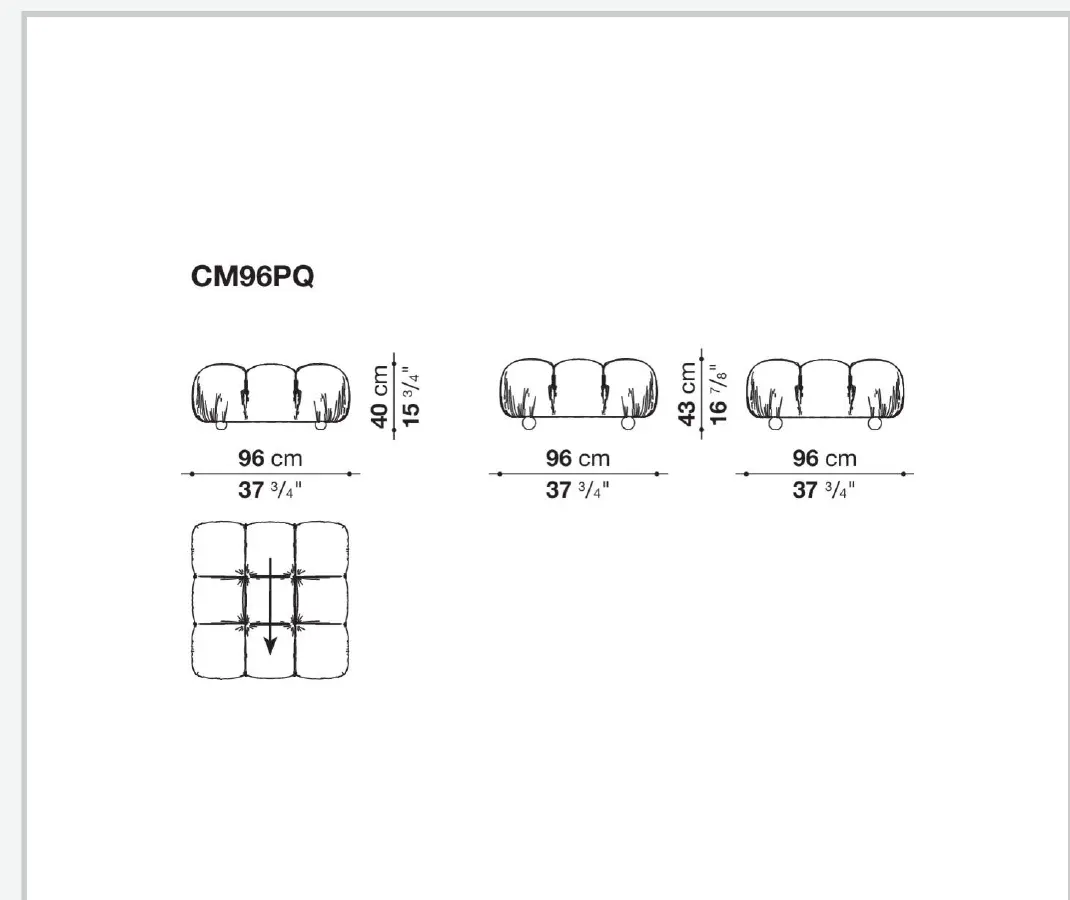
The system begins with the original 90 × 90 cm seat module. Backs and armrests are joined with tie-rods, brass rings and stainless-steel carabiners, so individual elements can be unhooked and recombined without disturbing the design language.
A sofa that
directs the room.
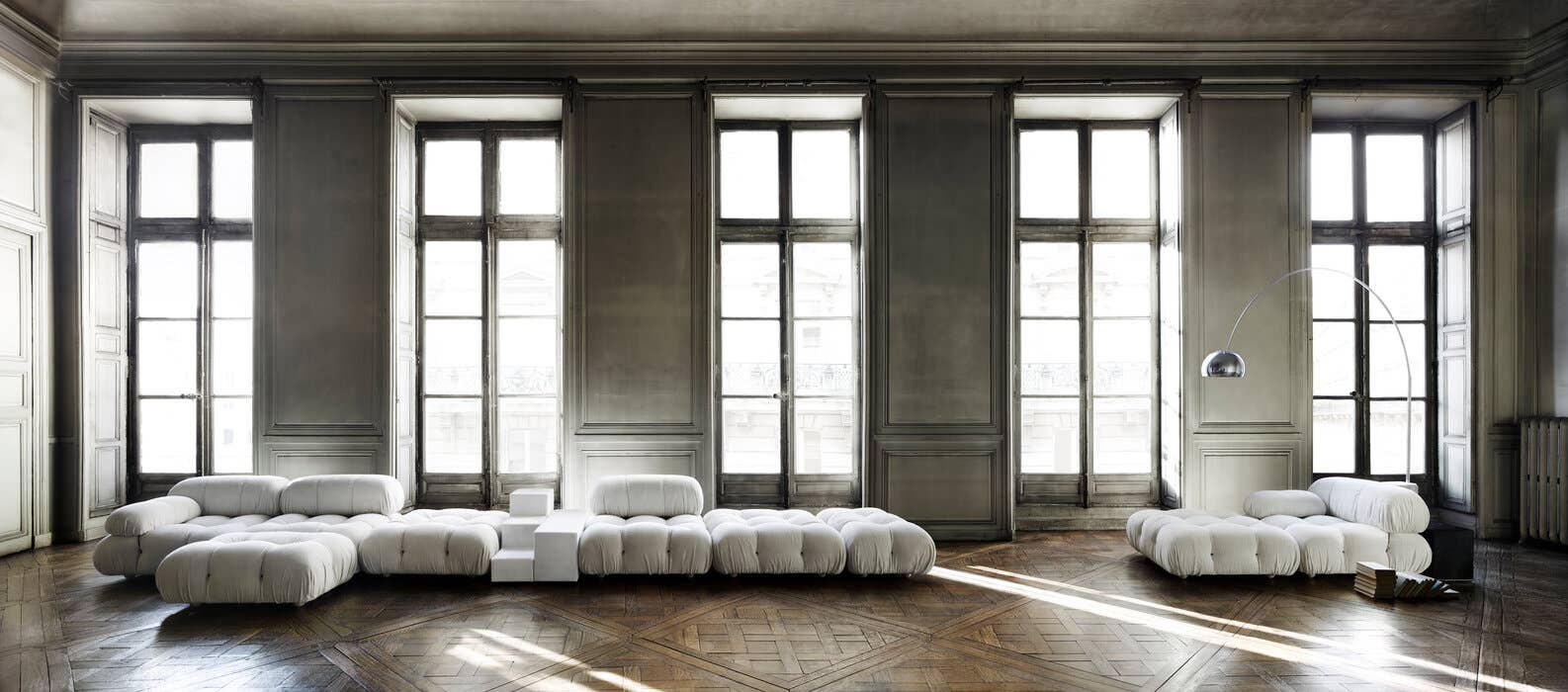
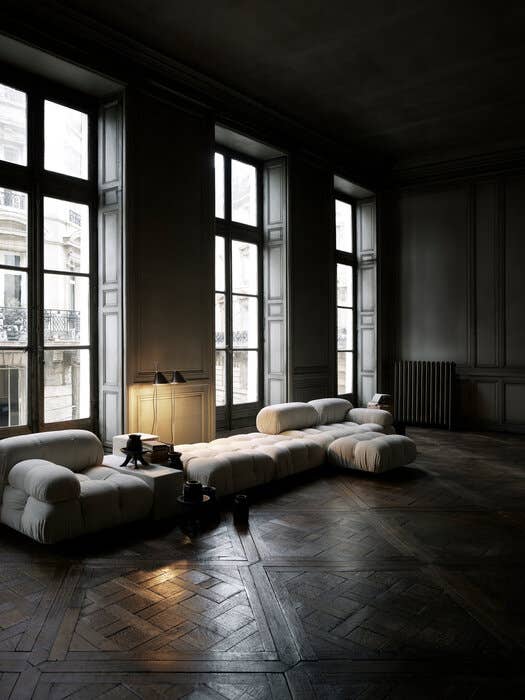
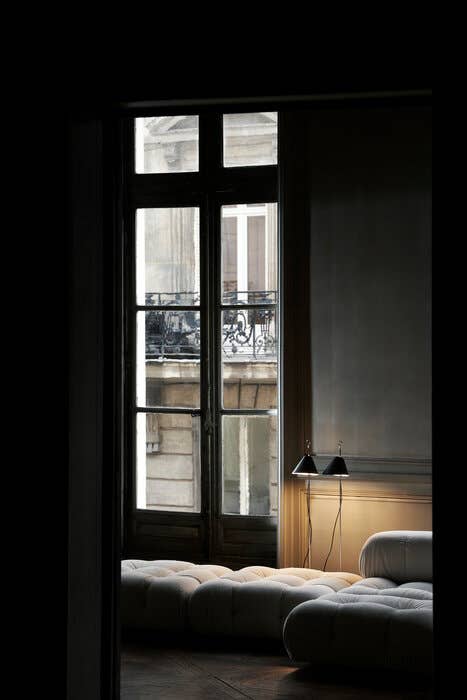
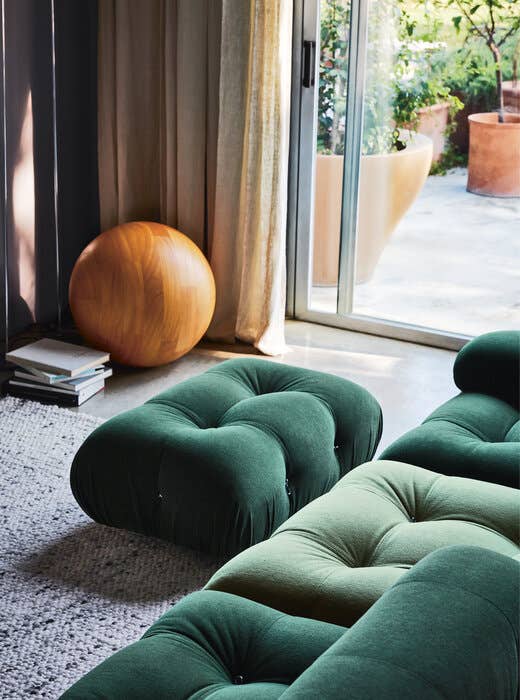
The catalogue studies show Camaleonda behaving less like an object placed against a wall and more like an architectural centre. A backrest can establish a boundary; an ottoman can open the composition; a change in orientation can create an entirely different way to gather.
Faithful outside.
Re-engineered within.
B&B Italia and Mario Bellini retained the original cutting pattern, proportions and visible connection logic. Inside, the new edition was rebuilt as a layered system that can be disassembled more easily.
Wood-fibre base panels support shaped polyurethane layers of different densities. Seat, back and arm components are tuned separately, creating the spring-like response behind Camaleonda’s relaxed appearance. Covers are available in fabric or leather and secured with metal studs.
Three ways
to compose it.
Compose from
the room outward.
Begin with room dimensions, circulation, views and the directions the seating should face.
Combine seats, backs, arms and ottomans to establish the right scale and degree of enclosure.
Select fabric or leather with the depth, colour and hand that best supports the tufted form.
Because the elements disconnect, the composition can be revised when the room changes.
Shape your
composition.
Kiosk can help plan the modules, orientation and upholstery around the way you want the room to work.